Commercial wallcovering in Minneapolis

Offices, restaurants, salons, shops and lobbies. We hang 54-inch commercial vinyl, printed murals and feature walls, and we plan the work around your hours so the doors stay open.

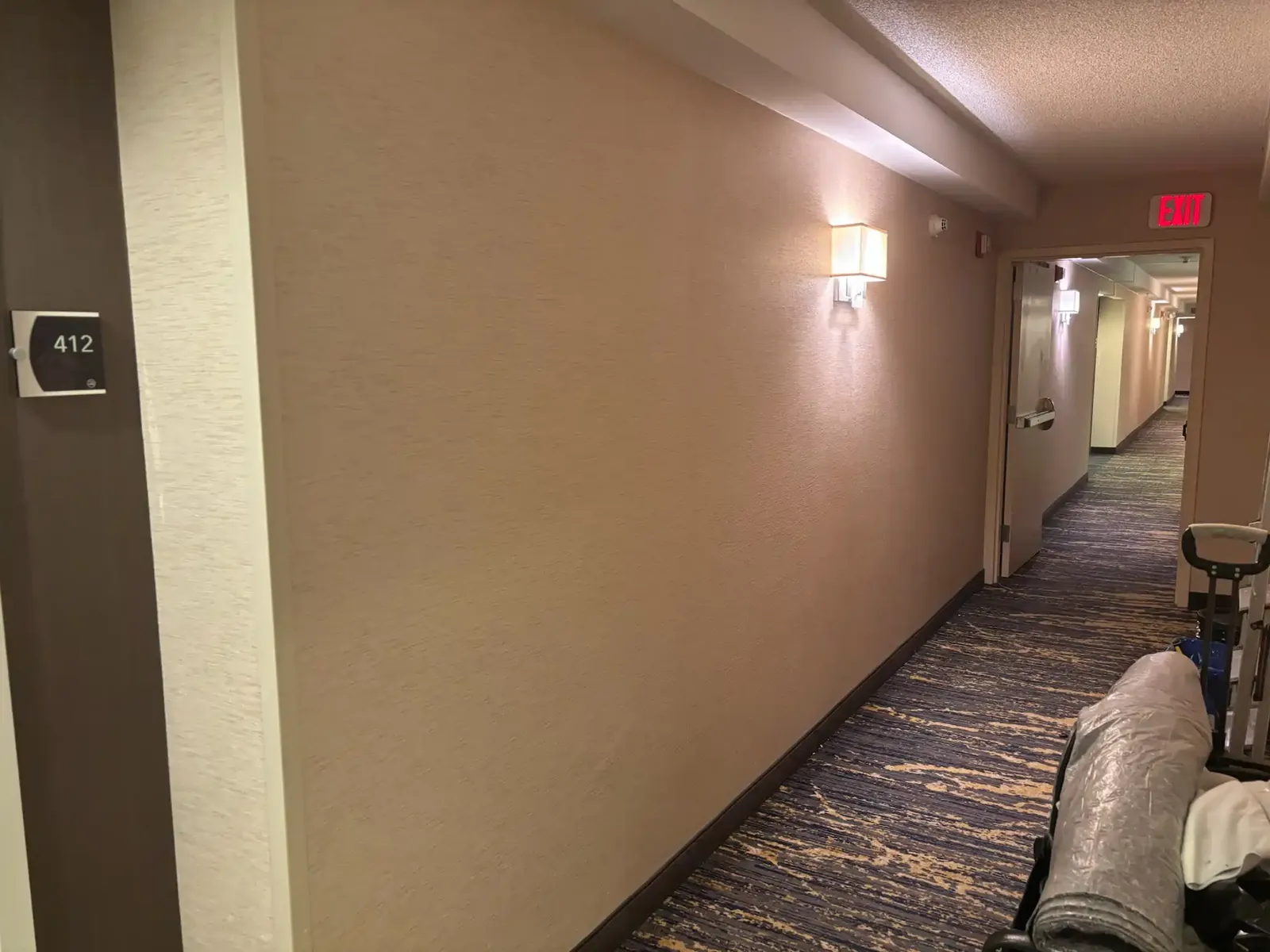
Textured beige commercial vinyl wallcovering along a long carpeted corridor

Wide goods and the walls they go on

Most commercial wallcovering comes in wide rolls, usually around 52 to 54 inches, sold by the linear yard rather than in residential double rolls. It is heavier than house paper and often vinyl-faced, made to be cleaned and to take knocks from chairs, carts and bags. Type I is the lighter grade, Type II the medium-duty grade most often used in corridors, offices and dining rooms.

The walls themselves vary just as much: new drywall in a tenant build-out, painted block in an older storefront, decades of patched paint in a restaurant that has been remodeled more than once. Wide goods are unforgiving of high spots, ridges and old anchors, so the wall is checked with a light held flat against it before we price the prep.

Prep for a wall that gets used

Holes from old signage and shelving are filled, ridges are knocked down and sanded, and areas of old texture are skimmed. On new drywall the wall needs a primer made for wallcovering before anything goes up, so the face paper of the board is sealed and the covering can be removed in a future remodel without destroying the wall.

Where the space will be cleaned hard, near kitchens or in restrooms, we talk with you about the covering, the adhesive and the edges. Corners that take traffic may need corner guards; the right place to decide that is before the paper goes up, not after.

Double-cut seams and heavy-duty paste

Wide vinyl is usually hung with the edges overlapped and then double-cut: one straight cut through both layers with a straightedge, the two waste pieces pulled out, and the seam rolled flat. Done right, it gives a seam you have to look for. Done carelessly, it scores the wall underneath, so the cut is made with a light hand and the wall is protected where needed.

Commercial vinyl goes up with a heavy-duty adhesive suited to it, applied with a roller and given the open time the maker specifies. Many wide goods are hung by reversing every other strip so slight shading at the edges evens out; we follow the instructions on the roll label for each product.
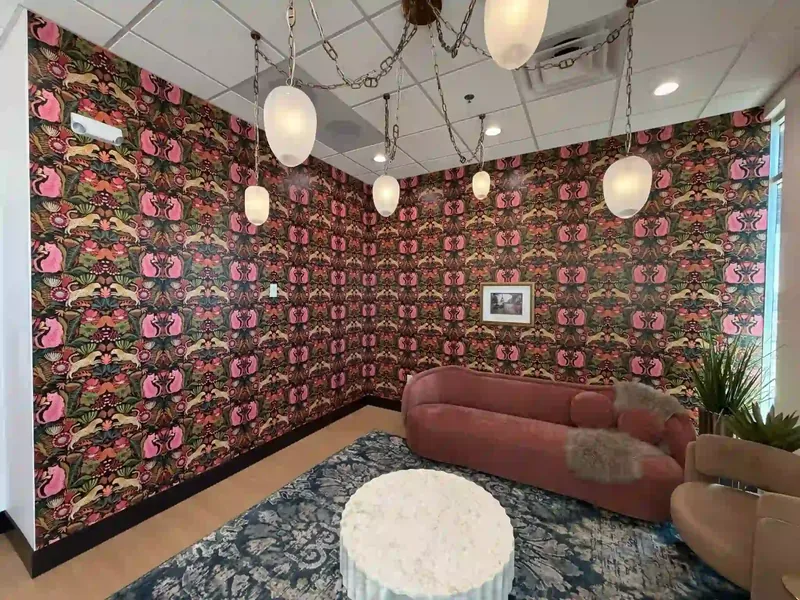
Pink and green ornamental wallcovering on two walls of a lounge with hanging glass pendants

Murals and printed feature walls

Printed murals for a brand wall, a dining room or a waiting area come as numbered panels. We lay them out dry against the wall, confirm the print matches the wall size with the bleed the printer allowed, and work out where a logo or a face in the image must not land on a seam, an outlet or the edge of a door frame.

Some printed panels are meant to overlap, some to butt; the print shop's instructions decide. We hang a test panel first, check color and alignment with you, and then hang the rest in order.

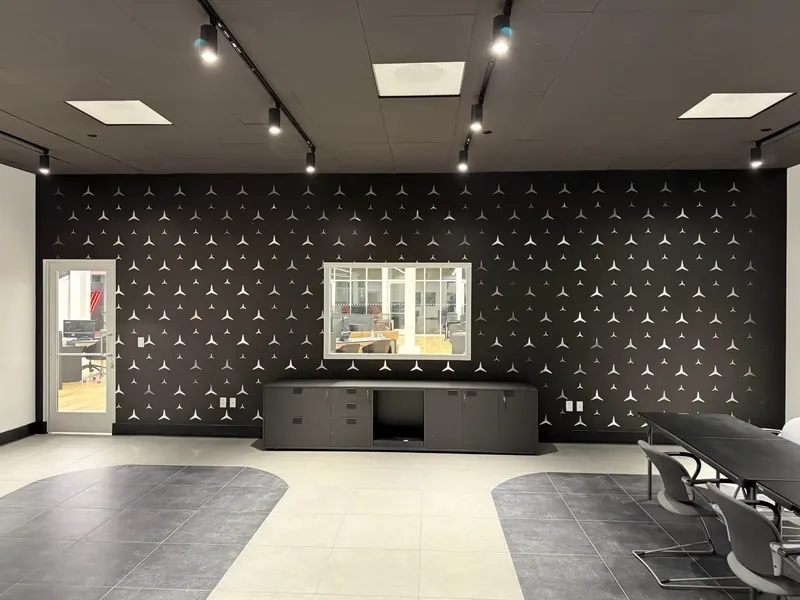
Black geometric wallcovering on the long wall of an open office with track lighting

Working around your hours

Restaurants and shops can rarely close for a wallcovering job. We can start early, work after close or on a weekend, and phase a large space so that one section is done before the next is opened up. Dust from sanding is kept low, and the area is cleaned at the end of each shift.

Tell us about building rules up front: work hours, loading and parking, whether the building needs a certificate of insurance or product data sheets for the covering. Some buildings and inspectors ask for the fire rating of interior finishes, and that paperwork comes from the covering's maker, so it is easier to collect before ordering.

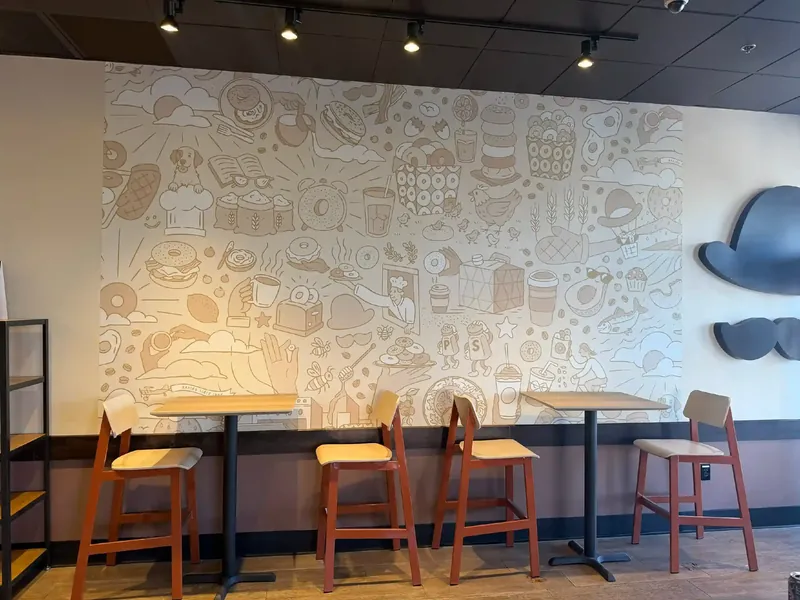
Cream line-drawing mural behind high café tables and wooden stools

Corridors, clinics and long runs

Hotel and apartment corridors, clinics and office suites have long walls broken by many doors. Over a long run, a small lean in the first strip becomes a visible tilt by the far end, so we snap plumb lines often and check them against the door frames as we go. Lighting in corridors usually rakes along the wall, which shows ridges and seams, so the prep standard is higher there, not lower.

In occupied buildings we work floor by floor or section by section, keep exits and doors clear, and leave each area clean and usable at the end of the day.

Repairs years later

A commercial wall takes damage: a cart corner, a moved shelf, a leak from above. Wide vinyl can be patched well if there is matching material. We label the leftover rolls and offcuts with the room, the product and the run number and leave them with you, so a repair years later uses the same run.

A patch is made by laying a piece of matching covering over the damage with the pattern lined up, cutting through both layers in one go, removing the damaged piece and pasting the new one in its place. On a plain or textured vinyl, done with the right material, it is very hard to find afterwards. Without stock from the same run, the best patch in the world will show.

Ordering for a commercial job

Wide goods are ordered by the yard, and pattern repeat, the number of walls and the reverse-hang rule all change the count. Send us the drawings or the wall sizes and the product, and we will give you a count to check against the supplier's. Order everything from one run, with a little extra for future repairs; a matching run is hard to find later.

Questions about commercial wallcovering

Can you work at night or on weekends?

Yes. Most restaurant and retail jobs are scheduled early, late or over a weekend, and larger spaces can be done in phases.

What is the difference between Type I and Type II vinyl?

They are durability grades. Type I is lighter and suits low-traffic rooms. Type II is heavier and is the common choice for corridors, offices and dining areas.

Do you hang murals with our logo?

Yes. We hang printed panels and feature walls, and we plan the layout so the logo or key image does not fall on a seam, an outlet or a door edge.

Can you work from our designer's drawings?

Yes. Send the drawings, the finish schedule and the product information, and we will price and plan from them.

Who orders the material?

Usually you or your designer, because pricing and lead times run through the supplier. We confirm the quantity and check the rolls when they arrive.

How do you keep dust and smell down in an open business?

Sanding is kept to the areas that need it and contained with plastic where we can, and we clean at the end of every shift. Most wallcovering adhesives have little odor, but if your space is sensitive, such as a café kitchen or a clinic, tell us so we can check the product data and plan the ventilation and the order of the rooms.

Price your commercial job

Which room, about how big, and which paper. We call back to set a time to see the wall.

(763) 363-5382 [email protected]
Elliot Wallpaper Hanger
701 S 25th Ave, Minneapolis, MN 55454
Which room?
Room, wall size, wallpaper type

(763) 363-5382 Free estimate