Grasscloth and naturals in Minneapolis

Grasscloth, sisal, jute, paperweave, cork, silk and other naturals. They are beautiful and unforgiving: every strip is a little different, and paste on the face does not come off. We hang them slowly and in order.

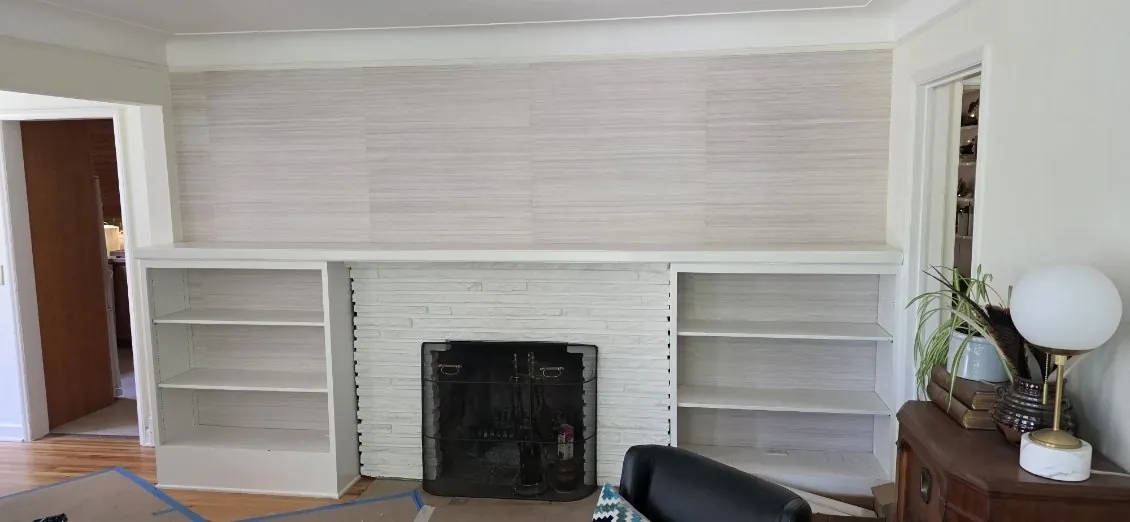
White grasscloth above a painted brick fireplace and built-in shelves

Why naturals behave differently

Grasscloth is woven plant fibre laid onto a paper backing. Because the fibre is natural, each strip shades a little differently, and the seams always show; there is no pattern to hide them. Makers say so on the label, and it is part of the look. What a good installer controls is how much the variation jumps from strip to strip, how tight the seams are and whether the face stays clean.

Sisal, jute and paperweave behave much the same. Cork comes as a thin layer on a backing and can be brittle at the edges. Silk and other fabric wallcoverings show every bump in the wall and every fingerprint of paste. All of them need a smooth, primed wall and a careful hand.

Unrolling the order before we cut

Before the first cut we check that every roll carries the same run number and open them to look at the color. Then we lay the strips out and decide their order, so the shading moves gradually around the room instead of jumping at a seam. Some makers recommend reversing every other strip to even out edge shading; when the label says so, we do it.

Strips are numbered on the back in hanging order. That way a strip that looks a shade off can go behind a door or above a window rather than in the middle of the focal wall.

A wall smooth enough for fibre

Grasscloth looks forgiving because it is textured, but the backing is thin and every ridge under it catches the light along the weave. Old plaster with waves gets skimmed; textured drywall gets skimmed flat. The wall is then primed with a wallcovering primer, and on dark naturals we sometimes tint it close to the color of the backing so a hairline gap at a seam does not flash white.

Many naturals are not washable and do not like moisture. We steer them away from full bathrooms and splash zones, and in a powder room we talk about ventilation before hanging.

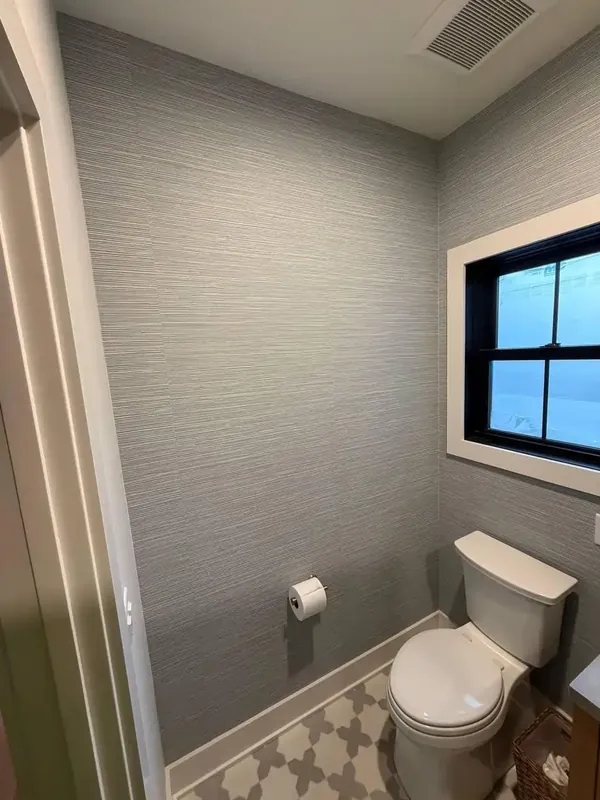
Gray grasscloth in a small powder room with a black-framed window

Paste, seams and a clean face

Most naturals are pasted on the back with a clear adhesive the maker recommends and booked briefly; some are hung paste-the-wall. The key is to keep paste off the face. Water and paste marks on grasscloth do not wash off; they dry as stains. We work with clean hands, clean tools and a damp sponge only on the backing edge, never scrubbing the face.

Seams are butted, not overlapped, and pressed with a seam roller lightly enough that the fibre does not flatten into a visible line. Corners are wrapped and re-plumbed. Trimming is done with a new blade for every cut, since a dull blade drags the fibres and leaves a fuzzy edge.
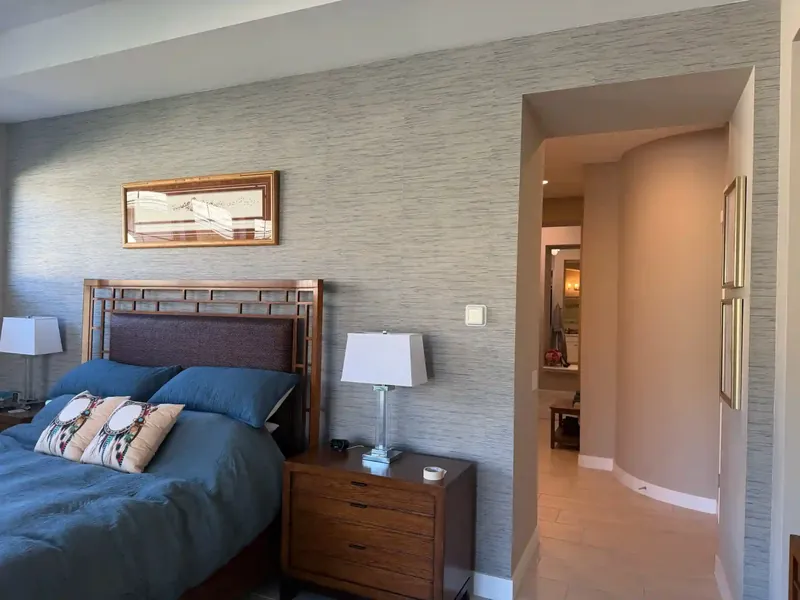
Silver-gray grasscloth on a bedroom wall behind a wooden headboard

Living with grasscloth through a Minnesota year

Natural fibres take up and release moisture, so they move a little between humid summers and very dry heated winters. Letting the rolls rest in the room before hanging and priming the wall properly keep that movement to a minimum. A small amount of seam visibility is normal for the material; seams that open wide usually point to an unprimed wall or overstretched strips.

Day to day, keep naturals out of direct splash and dust them with a soft brush or a vacuum brush attachment. Avoid wiping them with water.

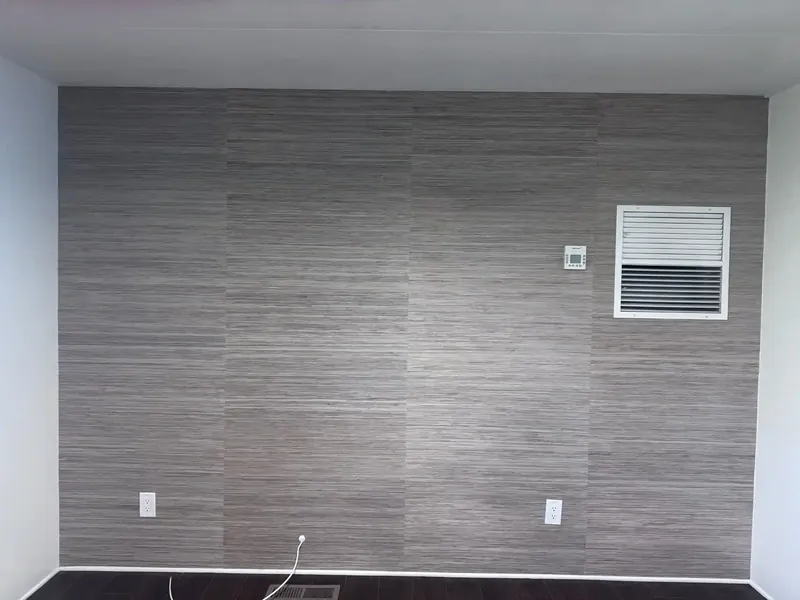
Gray grasscloth feature wall with visible panel joins and an air return cut in cleanly

Ceilings and walls with many cuts

Grasscloth on a ceiling is striking and slow work: strips are pasted and held overhead, and the weave direction has to run the same way across the whole ceiling. We plan the run so strips start from the most visible edge and the last, narrow strip lands where nobody looks first.

Walls with many outlets, vents, built-ins and window returns take longer in natural materials, because every cut exposes fibre ends. Each cut is made once, cleanly, with a new blade. Around a window, the returns are planned so the weave turns the corner instead of stopping abruptly at the casing.

Where naturals work best

Living rooms, dining rooms, bedrooms, studies and offices suit grasscloth well: rooms with steady air, no splashing and walls that are looked at rather than leaned on. It looks especially good behind built-in shelves, around a fireplace and on a ceiling, where the weave catches light from the side.

Strong direct sun can fade natural fibre over the years, the same way it fades a rug. If the wall faces a big south or west window, consider a lighter color, blinds or a faux grasscloth with better light fastness. Hallways and kids' rooms, where hands and bags brush the walls, are usually happier with a vinyl grasscloth look.

Ordering naturals

Order every roll from one run, with an extra roll set aside; a later run of a natural can look noticeably different. Naturals usually have no pattern repeat, but the layout still needs a little extra for trimming and for moving off-shade strips to less visible spots. Send us the wall sizes and the product before you order and we will check the count.

Questions about grasscloth and naturals

Will I see the seams?

Yes, a little. Seams and slight color changes between strips are part of natural grasscloth, and the makers say so. We keep the seams tight and order the strips so the shading moves gradually.

Can grasscloth go in a bathroom?

In a powder room with good ventilation, often yes. Near a shower or tub, we usually suggest a vinyl or non-woven with a grasscloth look instead.

Can it be cleaned?

Not with water. Dust it with a soft brush or the brush attachment of a vacuum. A stain on the face is very hard to remove, which is why we keep paste off it while hanging.

How much extra grasscloth should I order?

Naturals rarely have a pattern repeat, but you still need extra for trimming, for skipping strips that shade too far from their neighbors, and for future repairs. Send us the wall sizes and the roll size before you order; we will give you a count with that allowance built in, and suggest keeping one roll from the same run.

Is faux grasscloth easier?

Printed or vinyl grasscloth looks are more uniform, wipeable and easier to hang. They lack the depth of real fibre, but they suit kitchens and kids' rooms.

Why do you want to see the rolls before the job?

To confirm the run numbers and check for shading or damage while there is still time to exchange them.

Do you hang cork and silk too?

Yes. Both need a very smooth wall and careful handling. We look at the product and the wall before giving a price.

Price your grasscloth job

Which room, about how big, and which paper. We call back to set a time to see the wall.

(763) 363-5382 [email protected]
Elliot Wallpaper Hanger
701 S 25th Ave, Minneapolis, MN 55454
Which room?
Room, wall size, wallpaper type

(763) 363-5382 Free estimate